

Educational reference. This page summarizes a Florida Rule of Civil Procedure for educational purposes. The rule text and Committee Notes are mirrored from the Florida Bar's official publication and are public domain. The plain-English summary is the opinion of Phillips, Hunt & Walker and is general information only — not legal advice. Reading this page does not create an attorney-client relationship. Past results do not guarantee a similar outcome in your case.
What this rule means in plain English
Florida Rule of Civil Procedure 1.270 — Consolidation; Separate Trials — sets out the procedural requirements for this aspect of Florida civil practice. (a) Consolidation. When actions involving a common question of law or fact are pending before the court, it may order a joint hearing or trial of any or all the matters in issue in the actions; it may order all the actions consolidated; and it may make such orders concerning proceedings therein as may tend to avoid unnecessary costs or delay.
Rule Text (verbatim from the Florida Supreme Court)
(a) Consolidation. When actions involving a common question of law or fact are pending before the court, it may order a joint hearing or trial of any or all the matters in issue in the actions; it may order all the actions consolidated; and it may make such orders concerning proceedings therein as may tend to avoid unnecessary costs or delay. (b) Separate Trials. The court in furtherance of convenience or to avoid prejudice may order a separate trial of any claim, crossclaim, counterclaim, or third-party claim or of any separate issue or of any number of claims, crossclaims, counterclaims, third- party claims, or issues.

Fla. R. Civ. P. 1.270 — Consolidation; Separate Trials
Last verified from official source: April 30, 2026 · Source: Florida Bar — Florida Rules of Civil Procedure (eff. April 1, 2026), p. 76
Rule Text (verbatim)
(a) Consolidation. When actions involving a common question of law or fact are pending before the court, it may order a joint hearing or trial of any or all the matters in issue in the actions; it may order all the actions consolidated; and it may make such orders concerning proceedings therein as may tend to avoid unnecessary costs or delay.
(b) Separate Trials. The court in furtherance of convenience or to avoid prejudice may order a separate trial of any claim, crossclaim, counterclaim, or third-party claim or of any separate issue or of any number of claims, crossclaims, counterclaims, third- party claims, or issues.
Plain-English Breakdown
Practitioner notes by John M. Phillips, Board Certified Civil Trial Lawyer — coming soon. Watch the video below for the plain-English breakdown.
Rule Text (Verbatim)
The text below is mirrored verbatim from the Florida Bar’s official publication. Public domain.
(a) Consolidation. When actions involving a common question of law or fact are pending before the court, it may order a joint hearing or trial of any or all the matters in issue in the actions; it may order all the actions consolidated; and it may make such orders concerning proceedings therein as may tend to avoid unnecessary costs or delay. (b) Separate Trials. The court in furtherance of convenience or to avoid prejudice may order a separate trial of any claim, crossclaim, counterclaim, or third-party claim or of any separate issue or of any number of claims, crossclaims, counterclaims, third- party claims, or issues.
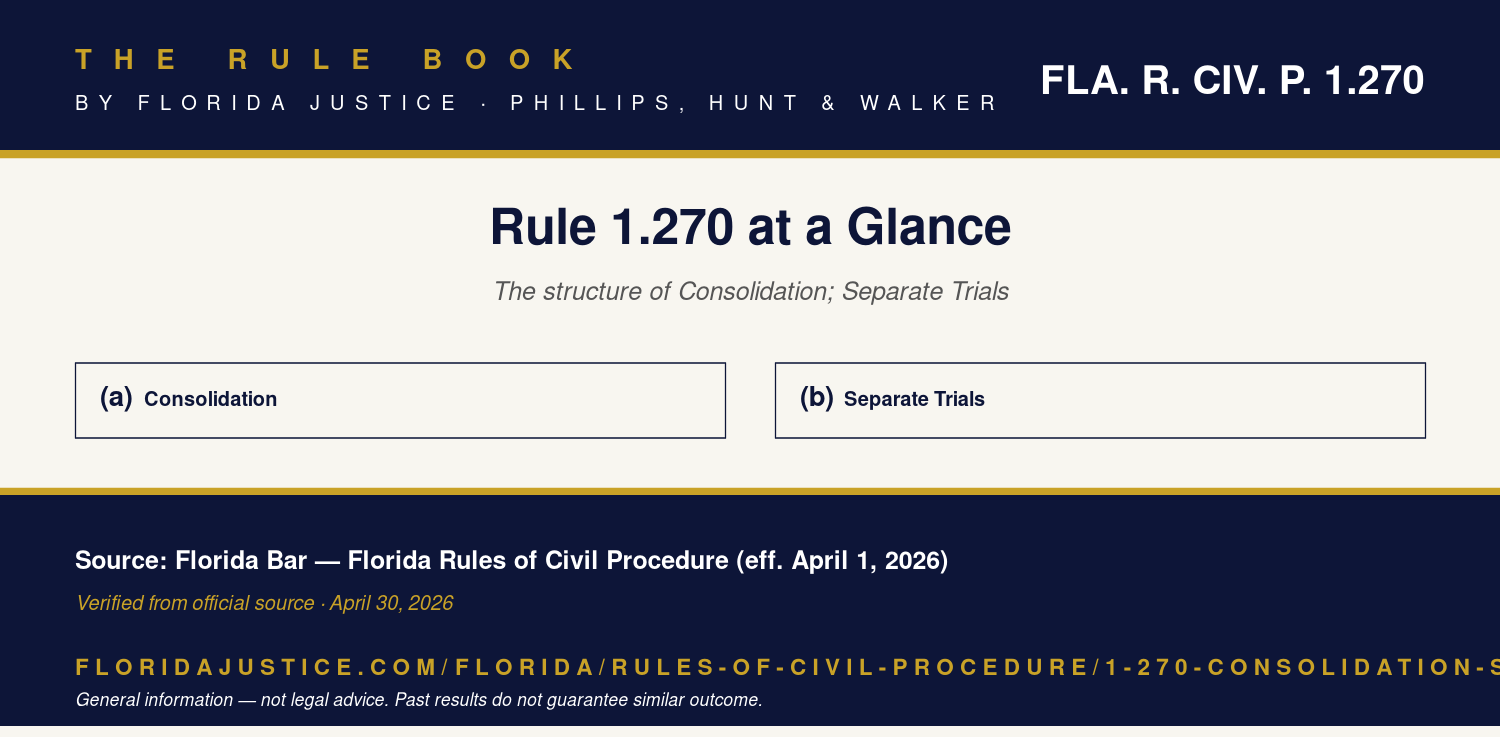
Infographic — Rule 1.270 at a Glance
Committee Notes
View Committee Notes (legislative history)
No Committee Notes for this rule version.
Lawyer-to-Lawyer Co-Counsel Referrals
If you’re a lawyer with a Florida case outside your normal practice — complex civil, catastrophic injury, federal court litigation, multi-state coordination — co-counsel referrals are a core part of what we do. You keep the client. We take the trial-side work. Fee split per Fla. Bar Rule 4-1.5 with full client consent.
Call John directly: (904) 444-4444
This page summarizes a Florida Rule of Civil Procedure for educational purposes. The rule text and Committee Notes are mirrored from the Florida Bar’s official publication and are public domain. The plain-English summary is the opinion of Phillips, Hunt & Walker and is general information only — not legal advice. Reading this page does not create an attorney-client relationship. Past results do not guarantee a similar outcome in your case.